 |
canberrabirds
|
|
|
canberrabirds
|
| To: | Geoffrey Dabb <> |
|---|---|
| Subject: | Painted Honeyeater |
| From: | "Julie Hotchin via Canberrabirds " <> |
| Date: | Sun, 18 Oct 2026 01:38:32 +0000 |
|
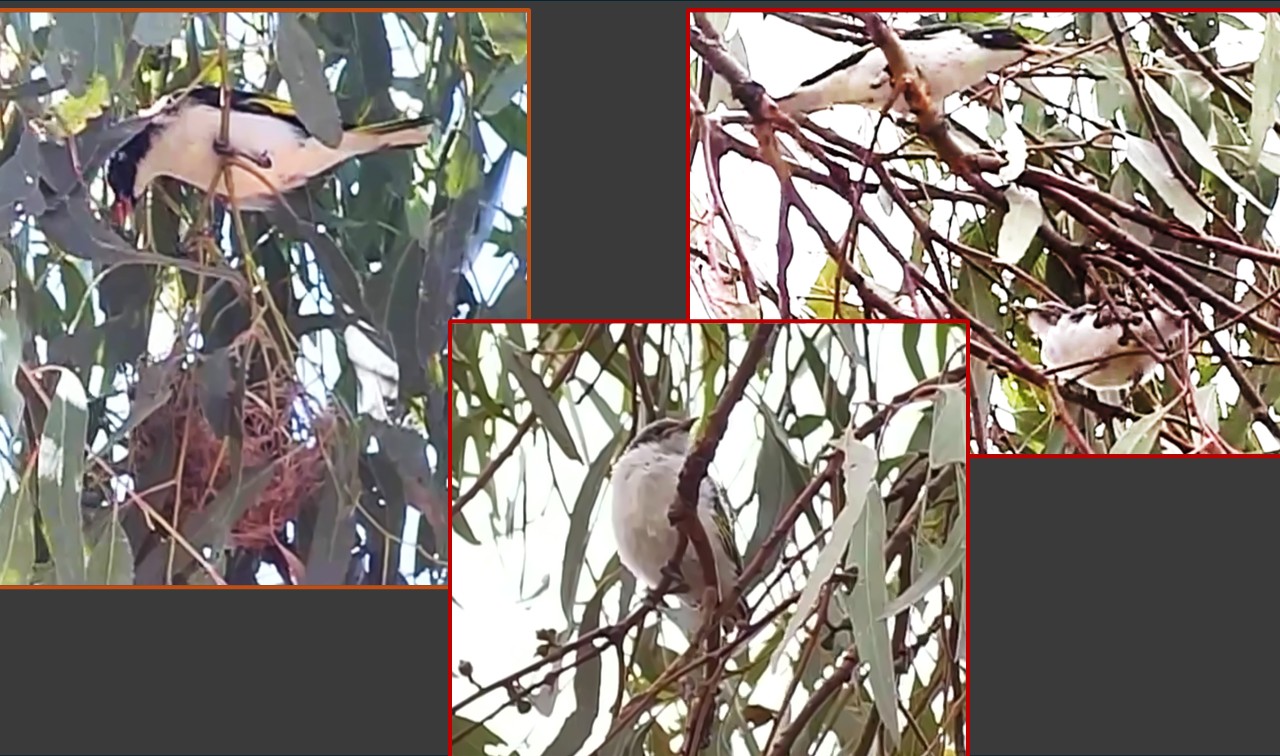
Thanks for these images of the nesting Painted Honeyeaters, Geoffrey, and for the insights into the unique way they spread mistletoe berries. It's good to learn a little more about these rare visitors to our region.
I have a question about the geographical movements of this species that you - or others on this list - may be able to shed some light on. I'm intrigued by the fact that this year they returned to the same gracious, large old yellow box in Campbell Park
where they were recorded in October and November 2020. Do we know anything about their site-fidelity? Or, is the popularity of this old tree more likely to be a coincidence as the birds are attracted to a site with suitable large eucalypts that support fruiting
mistletoe?
In his columns in Gang-gang in November and December 2020, Jack commented that it appeared surprising that the birds appeared in Canberra at that time, as it had been a wet spring, like this year.
Do we know how weather patterns and/or rainfall might affect their movements, or is the search for mistletoe the determining factor? Which then begs the question about how rainfall affects mistletoe fruiting . . .
I welcome any thoughts about this.
Cheers,
Julie
On Sat, 17 Oct 2026 at 10:56, Geoffrey Dabb via Canberrabirds <> wrote:
This email and any files transmitted with it may contain confidential information. If you believe you have received this email or any of its contents in error, please notify me immediately by return email and destroy this email. Do not use, disseminate, forward, print or copy any contents of an email received in error.
|
| <Prev in Thread] | Current Thread | [Next in Thread> |
|---|---|---|
| ||
| Previous by Date: | Sharp-tailed Sandpipers now spotted again at the FSTP. Thanks Chris, Kim Farley via Canberrabirds [canberrabirds-bounces@lists.canberrabirds.org.au] |
|---|---|
| Next by Date: | A variant on "the grass is always greener ...", davros--- via Canberrabirds [canberrabirds-bounces@lists.canberrabirds.org.au] |
| Previous by Thread: | Painted Honeyeater, Geoffrey Dabb via Canberrabirds [canberrabirds-bounces@lists.canberrabirds.org.au] |
| Next by Thread: | K2C surveys 11 October, Nicki Taws via Canberrabirds [canberrabirds-bounces@lists.canberrabirds.org.au] |
| Indexes: | [Date] [Thread] [Top] [All Lists] |
The University of NSW School of Computer and Engineering takes no responsibility for the contents of this archive. It is purely a compilation of material sent by many people to the Canberra Ornithologists Group mailing list. It has not been checked for accuracy nor its content verified in any way. If you wish to get material removed from the archive or have other queries about the list contact David McDonald, list manager, phone (02) 6231 8904 or email . If you can not contact David McDonald e-mail Andrew Taylor at this address: andrewt@cse.unsw.EDU.AU