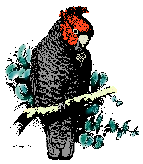
On the latest “Gardening Australia”(ABC TV) there was a good segment (near the end) about the Superb Lyrebird (even had a bit of film of Albert’s Lyrebird).
From a PhD researcher at La Trobe University. He stated that the lyrebird rakes over (or scratches and buries) more of the litter layer than any other animal does. I’m not sure how wide the comparison goes. And thus the species is a major contributor to vegetation
recycling and composting. Which it was suggested has value in fire suppression as well as tree regeneration. There was nothing mentioned about burying feathers (of its own or anything else), in particular, so I suggest they just scratch over feathers much
as they do with anything else. It also showed film of their display and he says that following a successful mating, the female loses some feathers at the display site and that is a way to know if the males have had successful display. I don’t know how one
would distinguish a body feather of a female from that of a male. An interesting idea. Also showed interesting things about nesting behaviour.
Philip
From: Philip Veerman
Sent: Saturday, 9 May, 2026 10:33 AM
To: 'calyptorhynchus' <>; 'David McDonald (Personal)' <>
Subject: RE: [Canberrabirds] Lyrebirds burying their feathers?
I am rather sceptical. Hard to think of why, if it is true. Is it a habit? Or something seen once or twice and made into a story? Lyrebirds scratch
around all the time.
From: Canberrabirds
On Behalf Of calyptorhynchus via Canberrabirds
Sent: Friday, 8 May, 2026 7:18 PM
Cc: Canberrabirds list <>
Subject: Re: [Canberrabirds] Lyrebirds burying their feathers?
On a couple of occasions I have found Lyrebird feathers, so this habit can’t be 100% efficient.
On Fri, 8 May 2026 at 6:56 PM David McDonald (Personal) via Canberrabirds <> wrote:
In Libby Robin’s wonderful book
What Birdo is that? A field guide to bird-people (MUP 2023), we read that the Superb Lyrebird ‘… takes the trouble to bury its discarded feathers …’ (p. 74). This behaviour does not seem to be documented in
HANZAB, nor can I find it in Pauline Reilly’s The Lyrebird: a natural history (NSW UP 1988).
Does anyone have any gen on this behaviour?
David
--
David McDonald
1004
Norton Road, Wamboin NSW 2620, Australia
Mobile: 0416 231 890 | Tel: (02) 6238 3706
E-mail:
This email and any files transmitted with it may contain confidential information. If you believe you have received this email or any of its contents in error, please notify me immediately by return
email and destroy this email. Do not use, disseminate, forward, print or copy any contents of an email received in error.
|